
DRAWING-BASED INDUSTRIAL BEARING PARTS
Bearing Materials
Specify the lining alloy and backing material together. Material selection is reviewed against the bearing geometry, load, speed, lubrication, temperature and original equipment requirements.
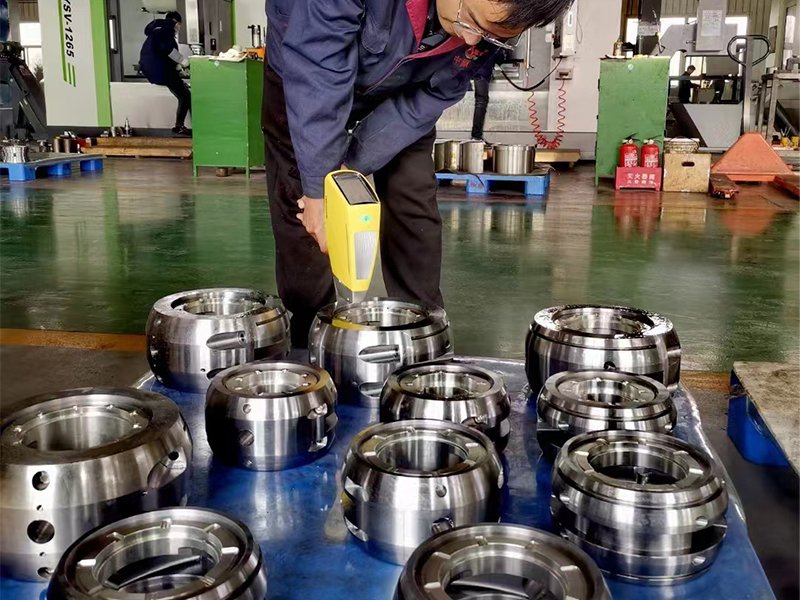
Babbitt lining materials
Babbitt, also called white metal, covers tin-based and lead-based bearing alloys. Supply the requested alloy designation or chemical composition when you send the drawing. The lining grade, thickness and backing must be confirmed together.
The table below is a designation reference. It does not imply that every alloy is stocked or suitable for every bearing.
ASTM B23 alloy designation reference
| ASTM alloy number | UNS designation | Alloy family |
|---|---|---|
| 1 | L13910 | Tin-based |
| 2 | L13890 | Tin-based |
| 3 | L13840 | Tin-based |
| 11 | L13870 | Tin-based |
| 7 | L53585 | Lead-based |
| 8 | L53565 | Lead-based |
| 13 | L53346 | Lead-based |
| 15 | L53620 | Lead-based |
Reference: ASTM B23-20(2025), Standard Specification for White Metal Bearing Alloys. ASTM B23 covers alloys supplied as bars or ingots. Finished bearing dimensions and operating limits are specified separately.
Confirm chemistry and acceptance requirements against the specified standard edition. Similar trade names or nominal compositions do not establish exact grade equivalence.
Backing materials
| Backing option for review | What to specify |
|---|---|
| Steel | Exact grade, geometry, joining details and any required heat treatment or material records. |
| Cast iron | Exact grade, existing shell condition and the required lining and machining scope. |
| Other specified metal | Grade, compatibility with the lining and the drawing requirements; availability is confirmed during review. |
For re-babbitting, identify the existing backing and provide photographs of cracks, distortion or other damage.
Other bearing materials
Aluminium alloy bearings require their own alloy and geometry specification. Metal-plastic thrust pads require the polymer face, support layer and backing construction to be identified.
These materials should not be treated as direct substitutes for a Babbitt grade without application review.
Material information for an RFQ
- Requested standard, edition and alloy designation, or chemical composition.
- Backing grade and required lining or layer thickness.
- Original equipment material requirements.
- Material verification, traceability and documentation requested for the order.